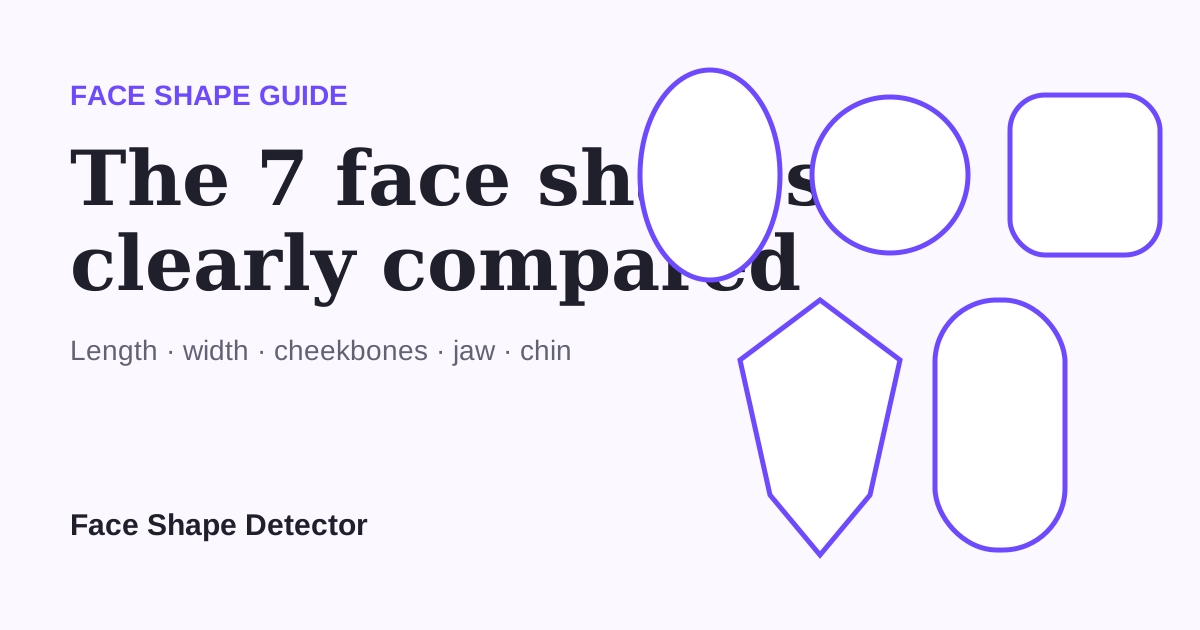
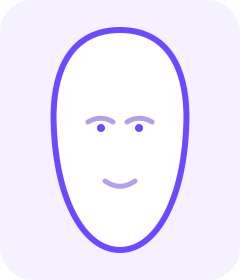
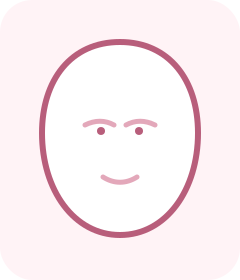
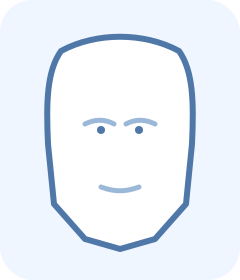
A quick comparison
No single measurement settles every case. Read across the table, then check the two or three features that are most visible in a straight, evenly lit photo.
| Shape | Length | Widest area | Jawline | Chin |
|---|---|---|---|---|
| Oval | Moderately longer than wide | Cheekbones | Soft taper | Rounded |
| Round | Close to width | Cheeks | Curved | Rounded |
| Square | Close to width | Upper face and jaw | Broad with corners | Broad |
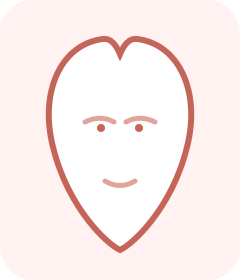
| Heart | Often slightly longer | Upper face | Tapers inward | Narrow or pointed |
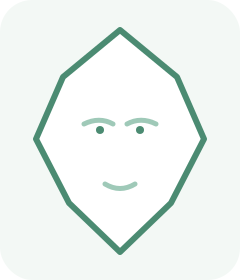
| Diamond | Usually longer | Cheekbones | Tapered | Narrow |
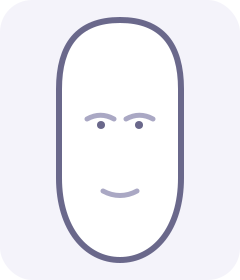
| Oblong | Clearly longer | Fairly even | Straight or softly rounded | Rounded or broad |
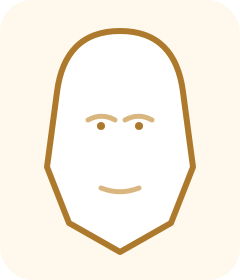
| Triangle | Varies | Jaw | Broad | Broad or gently pointed |
What each category means
- Oval: moderately longer than wide, with a smooth jaw and balanced taper.
- Round: length and width are relatively close, with curved sides and a soft chin.
- Square: width is carried through the upper face and jaw, and jaw corners are noticeable.
- Heart: the visible upper face is broader than the jaw, which narrows toward the chin.
- Diamond: cheekbones form the widest point while both the upper face and jaw are narrower.
- Oblong: face length stands out, while the sides often look straighter than on an oval face.
- Triangle: the lower face and jaw appear wider than the visible upper face.
Commonly confused shapes
Round and oval faces can share soft curves, but an oval outline is usually more elongated. Oval and oblong faces can share balanced features, yet an oblong face has a stronger length-to-width difference. Square and triangle faces may both have a defined jaw; the key question is whether the upper face is similarly wide or clearly narrower.
Heart and diamond faces both taper toward the chin. A heart outline usually appears broadest higher on the face, while a diamond outline is most prominent at the cheekbones.
Mixed characteristics are normal
Face-shape labels describe patterns, not fixed biological types. You may have the length of an oval face, the cheekbone emphasis of a diamond, and a chin that sits between both. Use the closest category as a starting point and borrow useful styling ideas from the secondary match.
How to check your outline
- Use a front-facing photo taken from eye level and several feet away.
- Pull hair away from the sides and jaw without changing your natural hairline.
- Compare visible length, maximum width, cheekbone width, and jaw width.
- Look at the jaw corners and chin after comparing the main proportions.
- Retake the photo if a close lens, head tilt, smile, or shadow changes the outline.
Mistakes that change the answer
Measuring to the top of the hairstyle, treating a hidden hairline as exact, using a wide-angle selfie, or tracing hair instead of the facial outline can all shift the result. Compare proportions rather than expecting millimetre-level precision.
Frequently asked questions
Which face shape is most common?
There is no reliable universal count for these informal categories, and many faces sit between labels. The useful question is which visible pattern best describes your proportions.
Can weight or age change the visible shape?
Changes in soft tissue, hairstyle, facial hair, and skin can alter the visible outline, although underlying bone structure remains an important part of it.
Should I use a mirror or a photo?
Use both if possible. A mirror gives a live view without camera freezing, while a well-taken photo makes side-by-side proportion comparisons easier.