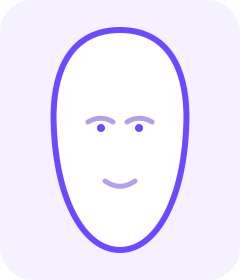
The proportion pattern
Visible face length is noticeable but not extreme. The outline is widest around the cheekbones, then reduces gradually above and below them. Because the transitions are soft, no single area dominates the silhouette.
- Moderately elongated length-to-width ratio
- Cheekbones slightly wider than jaw
- Gently curved jawline
- Rounded rather than pointed chin
How to check manually
Take a straight photo at eye level. Compare the distance from the visible upper-face landmark area to the chin with the widest part of the face. Then check whether the jaw tapers smoothly rather than dropping in straight parallel sides.
- Confirm the face is longer than wide.
- Look for the broadest point near the cheeks.
- Check for a soft, even taper toward the chin.
- Repeat with a neutral expression if smiling widens the cheeks.
Oval, round, or oblong?
A round face is closer in length and width and often looks fuller through the cheeks. An oblong face has a stronger vertical emphasis and commonly straighter sides. Oval sits between them: elongated, but with a visible curve and balanced taper.
| Feature | Oval | Round | Oblong |
|---|---|---|---|
| Length | Moderately longer | Close to width | Clearly longer |
| Sides | Gently curved | Rounded | Often straighter |
| Jaw | Soft taper | Soft curve | Soft or broad |
Hair principles
Oval proportions can accommodate many silhouettes. Choose volume placement for the effect you want rather than trying to correct the face. A fringe can shorten the visible length; height at the crown can lengthen it; texture near the cheeks adds width.
- Short hair: keep the outline intentional around the ears and temples.
- Medium or long hair: layers can add movement without hiding the jaw.
- Curly or coily hair: shape the overall volume where it supports your preferred balance.
- Men's styles: consider how top height and tight sides alter visible length.
Glasses principles
Start with frames about as wide as the broadest part of the face. Angular frames add definition, while rounded frames repeat the softer outline. Lens height, bridge fit, and temple comfort matter more than following a shape rule.
- Avoid temples that bow outward from a frame that is too narrow.
- Check that the bridge sits securely without pinching or sliding.
- Treat oversized frames as a fit decision, not just a style category.
Why a mixed result happens
An oval face may score near oblong when a photo lengthens the face, or near round when the camera is close and the cheeks appear broader. A narrower chin may also introduce heart or diamond characteristics.
Photo limitations
Hair volume is not the upper-face boundary, and a selfie cannot reveal an exact hairline measurement. Use visible landmarks consistently and retake images with strong head tilt, close-lens distortion, or a hidden jaw.
Frequently asked questions
Is an oval face always narrow?
No. Oval describes the relationship between length, width, and taper. The overall face can be broader or narrower while keeping that relationship.
Can an oval face have a defined jaw?
Yes. The jaw can be visibly defined without having the broad corners and near-equal upper and lower widths associated with a square outline.